Why Experts Are Watching the Housing Market Closely in 2026
25 April 2026
Let’s be honest: if you’ve glanced at the real estate headlines lately, you’ve probably felt like you’re trying to read a weather forecast during a hurricane. One day, prices are dropping. The next, mortgage rates are climbing. Then, inventory is suddenly shrinking. It’s enough to make your head spin. But here’s the thing—2026 isn’t just another year on the calendar. It’s shaping up to be a turning point, a kind of “perfect storm” that has economists, brokers, and even your neighbor who watches HGTV nonstop all leaning in with wide eyes.
Why the intense scrutiny? Because 2026 is where a lot of lingering economic threads—interest rate policies, demographic shifts, housing supply shortages, and generational wealth transfers—are finally going to knot together. And trust me, the outcome will ripple through your wallet, your investment portfolio, and maybe even your dream of owning a home.
In this article, I’m going to break down exactly why experts are watching the housing market closely in 2026. We’ll dig into the data, peel back the layers of speculation, and talk about what it all means for you—whether you’re a first-time buyer, a seasoned investor, or just someone trying to keep their rent from skyrocketing.
The Great Mortgage Rate Riddle: Will 2026 Finally Crack the Code?
You’ve probably heard the phrase “mortgage rates are like a roller coaster” a thousand times. But in 2026, it’s more like a roller coaster that’s also on fire and being steered by a distracted wizard. Let me explain.For the past few years, the Federal Reserve has been playing a high-stakes game of economic Jenga. They raised interest rates aggressively to tame inflation, and that sent mortgage rates soaring above 7%—a level that hasn’t been normal since the early 2000s. But here’s the twist: by late 2025 and early 2026, the Fed is signaling a potential pivot. Some experts predict a slow, cautious cut in the federal funds rate, which could trickle down to mortgage rates.
Why does this matter? Because even a half-percent drop in mortgage rates can unlock a tidal wave of demand. Imagine you’re sitting on a beach, and the tide goes out really far. Suddenly, everyone rushes in to claim the wet sand. That’s exactly what could happen if rates dip from, say, 6.8% to 6.2%. Buyers who’ve been sitting on the sidelines for years—waiting, saving, crying into their coffee—might finally jump in.
But here’s the kicker: if rates drop too fast, it could trigger a bidding war frenzy that pushes prices back up. That’s why experts are watching the Fed’s every move like a hawk watches a mouse. The question isn’t just “Will rates fall?” but “How fast and how far?” A slow, steady decline would be a sweet spot. A sudden plunge? That could be chaos.
The Inventory Paradox: More Homes, But Still Not Enough
You’d think that after years of low inventory, builders would be cranking out homes like a factory on overdrive. And they are—sort of. New construction starts have been climbing, especially in the Sun Belt and suburban areas. But here’s the weird part: we’re still facing a massive shortage.Let’s do some quick math. The U.S. needs roughly 1.5 to 2 million new homes per year just to keep up with population growth and household formation. In 2025, we were hovering around 1.3 million. That gap—the “missing homes”—is like trying to fill a bathtub with a teaspoon while the drain is wide open.
Why is 2026 different? Because a lot of those new builds started in 2023 and 2024 are finally hitting the market. But here’s the rub: many of them are luxury or “starter castle” homes priced above $400,000. The affordable housing segment? Still criminally underbuilt. So you might see headlines like “Inventory Up 15%!” and think, “Great, now I can buy.” But when you actually look, those homes are either too expensive or in locations where nobody wants to live (think: exurbs with a 90-minute commute).
Experts are watching this closely because the mix of inventory matters more than the raw number. If we get a surge of high-end homes but no affordable options, we could see a bifurcated market—luxury homes sitting unsold while middle-class buyers fight over fixer-uppers like it’s Black Friday.
The Generational Handoff: Millennials and Boomers Collide
Here’s a fun fact: 2026 marks the year when the oldest Millennials turn 45, and the youngest Boomers turn 62. That’s not just a demographic milestone—it’s a seismic shift in housing demand.Millennials are now the largest generation in the U.S., and they’re entering their prime home-buying years. They’re having kids, they want good schools, and they’re tired of renting. But here’s the problem: many of them are carrying student debt, high childcare costs, and a lingering distrust of the economy. They’re not the “avocado toast” stereotype; they’re actually pretty savvy. But they’re also priced out of many markets.
Meanwhile, Boomers are aging. They own a massive chunk of the housing stock—especially the single-family homes in desirable suburbs. As they downsize, move to retirement communities, or pass away, those homes will trickle into the market. But will they trickle fast enough? Or will Boomers hold onto their homes longer because they’re locked into low mortgage rates and don’t want to sell?
This is the collision experts are watching. If Boomers release their homes en masse, it could flood the market with supply and cool prices. But if they hold tight, Millennials will keep fighting over scraps. 2026 is the year this tension becomes impossible to ignore.
The Affordability Squeeze: Wages vs. Home Prices
Let’s talk about the elephant in the room—the one that’s been sitting on the couch, eating all the chips, and refusing to leave. Home prices have skyrocketed far faster than wages. In 2020, the median home price was about 4.5 times the median household income. By 2025, that ratio had jumped to over 6 times. In many coastal cities, it’s 10 times or more.In 2026, something has to give. Either wages need to catch up (unlikely in a single year), or home prices need to come down (which hurts existing homeowners), or interest rates need to drop significantly (which would reignite demand and push prices back up). It’s a classic economic trilemma.
Experts are watching for signs of a “reset.” Some predict a modest price correction of 5-10% in overheated markets like Austin, Phoenix, and Boise. Others argue that home prices will simply stagnate for years while inflation slowly erodes their real value. Either way, 2026 is the year we’ll see whether the market can self-correct or if we’re headed for a more painful bust.
The Rental Market: A Canary in the Coal Mine
You might not think about rentals if you’re focused on buying, but the rental market is like the appetizer before the main course. If rents are rising, it signals that demand for housing—any housing—is strong. If rents are falling, it might mean people are moving away or can’t afford to live there.In 2026, the rental market is a huge point of focus because of the “rentership” trend. More people are choosing to rent by necessity, not by choice. And with high mortgage rates, many would-be buyers are stuck renting longer than they’d like. This keeps rental demand high, which keeps rents sticky—even if home prices dip.
But here’s the twist: a wave of new apartment construction is coming online in 2026. In cities like Nashville, Charlotte, and Denver, we’re seeing a record number of multifamily units being completed. That could soften rents in some areas, especially for luxury apartments. But for affordable rentals? Still tight.
Experts are watching this because if rents finally start to drop, it might signal that the housing market is cooling more broadly. If rents stay high, it’s a sign that the supply shortage is deeper than we think.
The Wildcard: Remote Work and Migration Patterns
Remember when everyone thought remote work was a temporary pandemic quirk? Well, it’s not. And in 2026, we’re seeing the long-term effects on housing markets.Cities that boomed during the pandemic—like Boise, Idaho, and Austin, Texas—are now seeing a slowdown as companies enforce return-to-office policies. Meanwhile, secondary cities like Columbus, Ohio, or Greenville, South Carolina, are gaining popularity because they offer a lower cost of living and decent job growth.
But here’s the real kicker: climate migration. More people are moving away from areas prone to wildfires, hurricanes, and flooding. In 2026, insurance costs in states like Florida and California are skyrocketing, making homeownership there feel like a gamble. This is shifting demand toward the Midwest and Northeast—places like Michigan, Pennsylvania, and upstate New York.
Experts are watching these migration patterns because they could reshape entire regional markets. A city that’s “hot” today might be cold tomorrow, and vice versa. It’s like a real estate game of musical chairs, and the music is about to stop.
The Investor Factor: Are We Headed for a Landlord Exodus?
Institutional investors—think Blackstone, Invitation Homes, and other big players—have been buying up single-family homes at an alarming rate. In some markets, they own 30% or more of the rental stock. This has driven up prices for regular buyers and created a lot of resentment.But in 2026, some of these investors might start selling. Why? Because interest rates are still high, and the returns on rental properties are getting squeezed. Plus, there’s growing political pressure to regulate corporate homeownership. A few states are even considering laws that would tax or limit institutional purchases.
If investors start dumping properties, it could flood the market with inventory—especially in the starter-home segment. That would be great for buyers but terrible for investors who overpaid. Experts are watching this closely because it could be the spark that ignites a broader correction.
The Psychological Factor: Fear, Greed, and FOMO
Let’s get real for a second: housing markets are driven by emotions as much as economics. In 2026, the psychological mood is a mixed bag.On one hand, you have “FOMO” buyers who are terrified of being priced out forever. They’re willing to stretch their budgets, waive inspections, and offer above asking. On the other hand, you have “wait-and-see” buyers who are convinced a crash is coming. They’re sitting on cash, waiting for the perfect moment.
This tension creates volatility. A single bad jobs report or a surprise rate cut could swing sentiment dramatically. Experts are watching consumer confidence surveys, Google search trends for “should I buy a house,” and even Reddit threads to gauge the mood.
Why? Because when sentiment shifts, it can become a self-fulfilling prophecy. If everyone thinks prices will drop, they’ll stop buying, and prices will drop. If everyone thinks prices will rise, they’ll rush in, and prices will rise. 2026 is the year where this psychological tug-of-war could tip one way or the other.
What Does This Mean for You?
Okay, so you’ve read all this, and you’re probably thinking, “Great, but what should I do?” Let me give you some practical takeaways.If you’re a buyer: Don’t try to time the market perfectly. If you find a home you love, can afford the payment, and plan to stay for 5+ years, buy it. 2026 might offer better rates than 2025, but it could also bring more competition. Focus on your personal finances, not the headlines.
If you’re a seller: Don’t assume the market will stay hot. Price realistically, stage your home, and be prepared to negotiate. 2026 could be a “normalizing” market where overpriced homes sit for months.
If you’re an investor: Be cautious. The days of double-digit appreciation are likely over. Look for cash-flowing properties in secondary markets, and avoid over-leveraging. 2026 might be a year to hold, not flip.
If you’re a renter: Keep an eye on new apartment construction in your area. You might see more options and better deals, especially in luxury buildings. But affordable rentals will remain scarce.
Final Thoughts: Why 2026 Matters More Than You Think
Here’s the thing about housing markets: they don’t move in straight lines. They lurch, stall, reverse, and sometimes leap. 2026 is shaping up to be one of those years where multiple forces—monetary policy, demographics, supply, and psychology—converge in a way we haven’t seen in decades.It’s not a doomsday scenario. It’s not a boom either. It’s a moment of clarity. A time when the fog lifts, and we see the market for what it really is: a complex, messy, beautiful system that rewards patience, knowledge, and a little bit of nerve.
So keep your eyes open. Listen to the experts, but trust your gut. And remember: real estate is local. National trends matter, but your neighborhood, your budget, and your timeline matter more. 2026 is just another year—but it might be the year that changes everything for you.
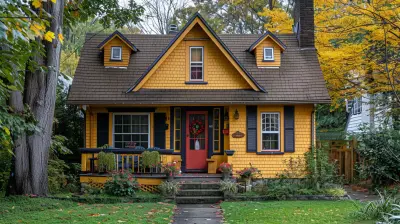
all images in this post were generated using AI tools
Category:
Housing BubbleAuthor:

Vincent Clayton
Discussion
rate this article
2 comments
Maggie King
Great insights—staying informed now builds confidence for smart moves ahead in 2026.
April 30, 2026 at 2:32 AM
Vincent Clayton
Thanks! Staying ahead of trends is key for making informed decisions. Exciting times ahead!
Zander McFarlin
This article provides a compelling overview of the housing market dynamics experts anticipate in 2026. Key factors such as interest rates, supply chain issues, and demographic shifts will significantly influence market trends. Staying informed on these developments is crucial for both buyers and investors. Great insights!
April 29, 2026 at 3:15 AM
Vincent Clayton
Thanks for your feedback! I'm glad you found the insights valuable. Staying informed really is key in such a dynamic market.