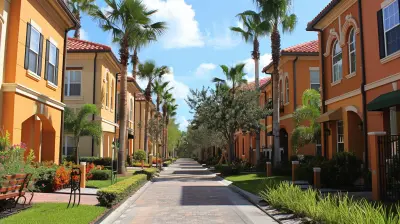
Why Location Remains King in All Commercial Real Estate Investments
28 December 2025
When it comes to real estate investing, you’ve probably heard the mantra a thousand times: "Location, location, location!" But why does location always seem to be at the top of every investor’s checklist?
Let’s break it down. Imagine you’re opening a restaurant. You could have the best food in town, but if you’re tucked away in an alley with zero foot traffic, your business might struggle. Now, place that same restaurant on a bustling street corner, and suddenly, you’ve got a recipe for success.
That’s the power of location in commercial real estate—it's not just important; it’s everything.

The Unmatched Power of Location
Whether you're investing in office buildings, retail spaces, or industrial properties, location determines nearly everything—accessibility, value appreciation, tenant demand, and even operational success.Think of it like dating. You can have all the great qualities—charm, stability, good looks (or in this case, modern infrastructure and amenities)—but if you’re in the wrong place at the wrong time, things just won’t work out.
Let's dig deeper into why location holds the crown in commercial real estate. 
1. Accessibility: More Foot Traffic, More Business
Would you rent a storefront in the middle of nowhere? Probably not. Successful commercial properties need to be easily accessible to customers, employees, and suppliers.Properties near major roads, highways, or public transport hubs tend to thrive. The more foot traffic and vehicle flow in an area, the higher the chances of attracting customers or tenants.
💡 Example: A retail store located in Times Square will always generate more business than the same store placed in a sleepy suburb. 
2. Supply and Demand: A Game of Scarcity
Not all locations are created equal. Some areas are in high demand, leading to soaring property values and increased rental income opportunities.But here’s the catch—there’s only so much prime land available. Cities don’t magically expand overnight, so when a property is in a hot location, it becomes a sought-after asset.
💡 Example: A commercial office in New York’s Financial District will always command higher rental income than one in a small rural town. 
3. Demographics Matter: Who’s Your Audience?
Imagine trying to open a luxury boutique in a blue-collar neighborhood or an industrial warehouse in an upscale residential area. See the mismatch? The demographics of an area dictate what types of businesses will succeed there.Before investing, it’s essential to research:
- The income levels of the local population
- The age group of potential customers/tenants
- The lifestyle preferences of the community
💡 Example: A high-end shopping mall is more likely to succeed in a wealthy neighborhood than in a low-income area.
4. Economic Growth: Follow the Money
Where money flows, business follows. Smart investors look for emerging markets where businesses are booming, populations are growing, and new developments are rising.Cities experiencing strong job growth, a tech boom, or infrastructure expansion are goldmines for commercial real estate investment.
💡 Pro Tip: Keep an eye on cities where big companies are setting up headquarters—that’s a clear sign of long-term economic growth.
5. Zoning Laws: What Can You Do?
A location might look perfect, but if zoning laws limit its commercial use, you’re out of luck. Understanding local zoning regulations is critical before investing.Some areas are strictly residential, while others allow a mix of commercial and industrial use. If you plan to open a retail store, but the area is only zoned for warehouses, you’re in trouble.
💡 Example: A bustling downtown location might be zoned for mixed-use development, allowing both residential apartments and commercial storefronts—maximizing rental potential.
6. Infrastructure and Amenities: The Hidden Value Boosters
No one wants to set up shop in a place with poor roads, unreliable utilities, and no modern conveniences. Properties in well-developed areas with strong public infrastructure tend to appreciate faster.Key factors that boost commercial property value:
- Roads & Highways – Easy access means more customers.
- Public Transport – Metro stations or bus stops nearby increase foot traffic.
- Internet & Utilities – Fast internet and reliable utilities are a must for businesses.
- Parking & Accessibility – No one likes circling for parking; easy access is a plus.
💡 Example: A coworking space next to a major subway station will always be in demand.
7. Competition & Market Trends: Find the Sweet Spot
Too much competition? Risky. Too little competition? Suspicious. The trick is to find a happy balance.If an area is oversaturated with similar businesses, it might be tough to stand out. On the flip side, if there’s zero competition, ask yourself why.
Before investing, analyze:
- How many similar businesses already exist?
- Is there a demand gap that your property can fill?
- Are market trends pointing to future growth in the area?
💡 Example: An office building in Silicon Valley will likely have high demand because of the sheer number of tech startups looking for space.
8. Resale & Appreciation: The Long-Term Payoff
The holy grail of commercial real estate investing? A location that gains value over time.While all properties depreciate physically, those in prime locations appreciate in value due to increasing demand. Many investors make their fortunes by buying in up-and-coming areas before prices skyrocket.
Pro Tip: Research cities where government projects, business developments, and population growth are trending upwards.
💡 Example: Investors who bought commercial properties in Austin, Texas, five years ago are seeing massive returns today due to the city's rapid tech expansion.
Final Thoughts: Why Location Will ALWAYS Reign Supreme
You can renovate buildings, update interiors, or improve management strategies, but you can’t change the location.Location dictates:
➡️ Tenant appeal
➡️ Foot traffic
➡️ Business success
➡️ Property appreciation
If you’re diving into commercial real estate investing, remember this golden rule: A mediocre property in a prime location will always outperform a great property in a bad location.
So, next time you’re looking at a commercial property, think like an investor, not just a buyer. Location isn’t just important—it’s the foundation of success.
all images in this post were generated using AI tools
Category:
Commercial Real EstateAuthor:

Vincent Clayton
Discussion
rate this article
2 comments
Abram Hines
Absolutely! Location truly makes all the difference in real estate!
January 18, 2026 at 5:20 AM
Vincent Clayton
Thank you! Absolutely, location is a crucial factor that can significantly impact the value and success of real estate investments.
Vera McGinn
Great insights! It's clear that location plays a vital role in commercial real estate. Understanding this can truly guide better investment decisions.
January 6, 2026 at 5:59 AM
Vincent Clayton
Thank you! Location is indeed crucial for success in commercial real estate, and understanding its impact can significantly enhance investment strategies.